
Decompression sickness is a complex condition and can show up in many different ways in different people. Through years of speaking to women in diving about their DCS experiences, we’ve heard breast related symptoms come up time and time again. Despite this, it’s rarely listed as a potential sign of DCS on lists of common symptoms or mentioned during dive training. So is breast pain a symptom of DCS? Let’s dive in.
Reports of breast pain in relation to decompression sickness
Within our Girls that Scuba community, we’ve received many anecdotal reports of breast symptoms in relation to DCS. In our Facebook Group between January 2024 and January 2026, we had at least 6 posts mentioning breast pain and DCS. From these 6 posts, at least 25 more women shared their own similar experiences in comments.
We have also shared community stories on our socials to raise awareness of breast symptoms potentially pointing to DCS.
These reports aren’t just recent following our own community’s awareness, though – we’ve found online discussions of breast pain after diving going back more than 25 years.
Can breast symptoms indicate DCS?
So is this all just coincidence, or is breast pain truly a symptom of DCS?
DAN (Divers Alert Network) confirmed that “Yes, breast pain can be a clinical manifestation of type 1 DCS” in a much-needed article published in November 2025. Their research has shown that breast symptoms can be related to cutaneous DCS, also known as “skin bends”, or lymphatic DCS.
What DCS symptoms may appear in the breasts?
There are a number of breast-related symptoms to be looking out for which could point to DCS. Here are some of the words used to describe breast symptoms which turned out to be decompression sickness:
- Pain
- Tenderness
- Itchiness
- Tingling
- Swelling
- Engorgement
- Discolouration
- Rash
What should you do if you experience breast pain after diving?
Much like with any symptoms of decompression sickness, divers are often quick to attribute unusual symptoms post-dive to another cause. In the words of DAN, “denial is arguably the worst ‘symptom’ of DCS”, and breast symptoms are no exception when it comes to being brushed aside.
Decompression sickness can occur on any dive, even with a safe profile. If you’re experiencing any unusual symptoms after a dive, there’s always a chance it could be DCS. As recognised by DAN, “Breast pain may be misinterpreted or overlooked, particularly if it is the diver’s sole complaint.” It’s important that symptoms are taken seriously and treated as DCS until proven otherwise.
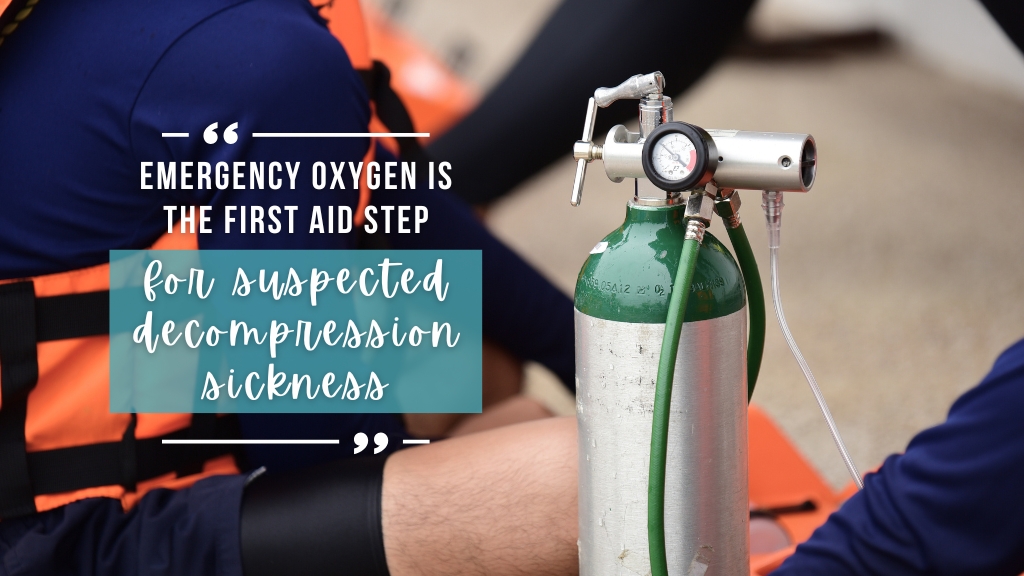
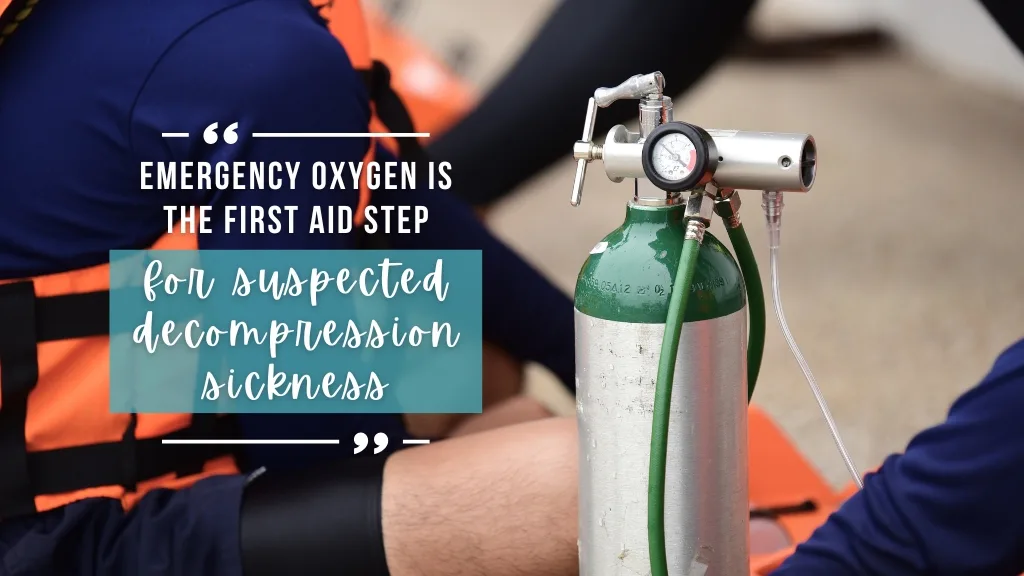
As with any suspected case of decompression sickness, the diver should be assessed for neurological symptoms. They should be given 100% oxygen, or the highest % of O2 available (i.e. nitrox). DAN and local medical services should then be contacted, and the diver may need further treatment in a recompression chamber.
DAN have dive physicians available by phone 24/7. Their dive medics can offer advice and liaise with any local medical services. They can also help to arrange medical evacuation and chamber treatment.
Medical evacuation and recompression treatment can be costly. For this reason, we highly recommend always travelling with dive insurance and travel insurance. This should cover you for dive medical treatment, as well as any travel complications (such as missed flights) which may arise from seeking treatment.
Why do DCS symptoms occur in the breasts?
There are a few reasons why breast pain may occur as a symptom of DCS. These are explained in medical terms in DAN’s answer, but we’re here to break that down into more understandable language.
Fat Distribution
DAN’s Explanation – “Cutaneous (skin) DCS tends to present in areas overlying adipose tissue, a specialized form of connective tissue that primarily provides energy storage and insulation. The abdomen, back, thighs, and breasts are the commonly affected regions.”
Our Translation – Adipose tissue is the technical term for fatty tissue. Breasts are mostly made up of this fatty tissue, which absorbs nitrogen at a higher rate than muscle. This means that there’s a higher risk of skin bends (often showing as tenderness and a rash) in the breasts, stomach, back, and thighs.
Lymphatic System
DAN’s Explanation – “Lymphatic DCS arises in anatomical regions containing lymphatic tissue, which primarily influences immune function and fluid regulation. The breast contains an extensive network of lymphatic vessels and lymph nodes, making it susceptible to obstruction and inflammation from DCS. Lymphatic DCS can lead to swelling and discomfort involving the lymph nodes in the axillae (under the shoulder joint), groin, or behind the ears.”
Our Translation – Bubbles can also form in the lymphatic system, a lot of which sits around the armpits and breastbone. You may also experience swelling around these areas, as well as the groin or behind the ears.
Equipment Issues
Whilst it’s not proven, some divers also theorise that tight equipment such as wetsuits or BCD straps around the chest area could contribute to the risk of bubble formation in breast tissue. This is another reason why well-fitted wetsuits are so important, particularly for women who can often struggle to find a good fit around the chest.


What could it be if it’s not DCS?
If you experience breast pain or other breast symptoms after a dive and find out that it’s not decompression sickness, it’s important to seek out further medical help to find a cause. Whilst it could be as simple as hormonal breast tenderness around your period, there’s a chance it could be something more serious such as breast cancer.
We’ve even heard from one member who found out she was pregnant due to post-dive breast tenderness! You should contact your medical practitioner as soon as possible to find out the cause for your experiences.
Raising Awareness
In some cases, breast pain is the first indication that a diver may be experiencing DCS. Oftentimes though, they are not taken seriously until more concerning and dangerous neurological symptoms begin to appear.
The more we encourage reports of breast symptoms in relation to DCS, the more we can raise awareness in hopes that it becomes a more widely recognised phenomenon.
Have you experienced breast pain as a symptom of DCS?
Share your story with our Girls that Scuba Community!