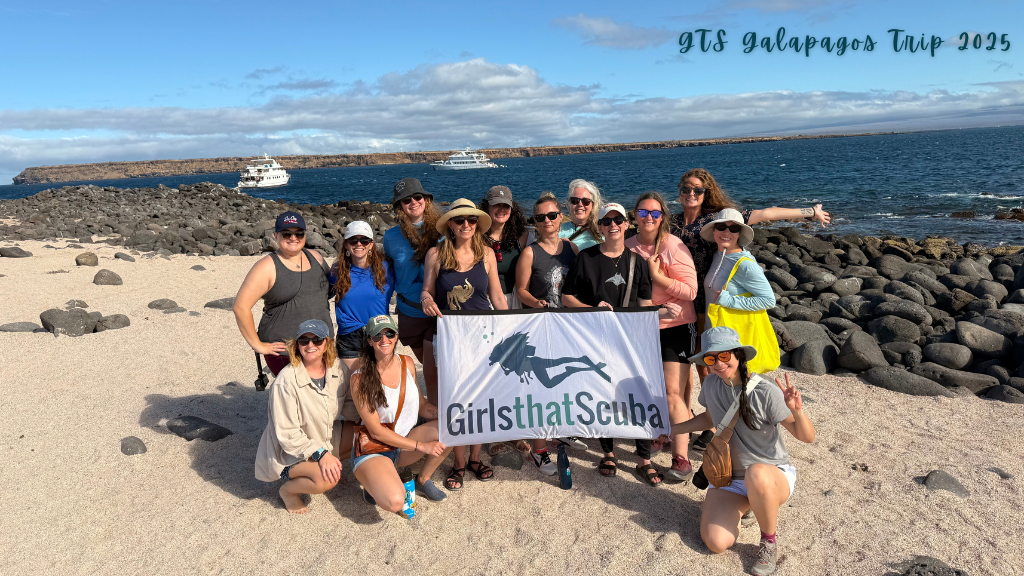
As a scuba diver, there’s no doubt that The Galapagos is on your scuba bucket list, and it should be! This World Heritage site not only has some of the world’s most biodiverse diving but is also home to marine life that you can’t see anywhere else in the world.
The Galapagos has become a strong favourite for our Girls that Scuba Trips, and we’ve learnt a lot about what a scuba diving trip to The Galapagos involves, and as a diver you’re going to want to know the nitty gritty of currents, water temperature and what you can expect to see. This guide goes through all of that and more!
The Galapagos – The Basics
The Galapagos consists of 19 Islands that are located approximately 1,000km west of mainland Ecuador and let’s be honest, it is not easy or cheap to get to The Galapagos, but that’s why it’s so important to do your research before you go.
Either Santa Cruz Island or San Cristobal Island are going to be your gateway to scuba diving in The Galapagos and to get there, you must first fly into mainland Ecuador. There are two options for this, either Mariscal Sucre International Airport (UIO) in Quito or Jose Joaquin de Olmedo International Airport (GYE) in Guayaquil.
From there you can take a domestic flight to either Beltra Island via Seymour Airport (GPS), which is a 5-10 minute ferry ride to Santa Cruz Island or San Cristobal Island via San Cristobal Airport (SCY). If you fly into Quito you will likely have a short layover in Guayaquil so flying straight into Guayaquil might be the best option depending on where you are flying from.
INSERT SKYSCANNER
As of July 2025, all visitors to Ecuador need to fill out a FRA Formulario de Registro Aduanero (Custom’s Form) online, 72 hours before arrival. You fill in the form with your personal information and it will generate a QR code which you can save to present on arrival.
Also, as of May 2025, all visitors to The Galapagos also need to fill out a Transit Control Card (TCT) which costs $20 USD, 24 hours before arrival. You fill in the form with your personal information and the address for your accommodation, if you are joining a liveaboard the name of the boat should come up. It will generate a QR code which you can save to present on arrival.
Most countries can enter Ecuador and The Galapagos for 90 days without a visa but your passport must be valid for 6 more months after your travel dates and you must also show a return flight or onward travel.
There are many land-based dive operators based on both Santa Cruz Island and San Cristobal Island that offer day-boat trips to popular dive sites. However, to truly see the best that The Galapagos has to offer, you’ll want to hop onto a liveaboard. We’ll dig into the community’s favourite land-based and liveaboard operators later!
What can I see diving in The Galapagos?
Scuba Diving in The Galapagos offers some of the most magical underwater experiences in the world. Due to the UNESCO World Heritage Site and marine reserves geographical location being at the confluence of three ocean currents, The Galapagos is one of the richest marine ecosystems in the world. Home to colourful coral reefs, kelp forests, over 450 species of fish, vertebrates and invertebrates, megafauna and so much more.
What are the conditions like?
Scuba Diving in The Galapagos is not a destination for newbie divers. Although The Galapagos Islands sit directly on the equator, the diving conditions here are far from tropical. The Galapagos is considered to have two seasons for scuba diving, the warm season from December to May and the cooler season from June to November. Both seasons offer incredible scuba diving for different reasons.
Visibility is generally 15-30 metres during the warm season but drops to 5-20 metres during the cooler season due to cold ocean upwellings and massive plankton blooms. However, these nutrient rich waters attract schools of hammerhead sharks, manta rays, whale sharks and other pelagics so poorer visibility does not necessarily mean worse diving in The Galapagos!
Water temperatures in The Galapagos range throughout the year. In the warm season from December to May, the Panama Current brings warm water from Central America pushing water temperatures up to 18°C-28°C (68°F – 82°F). During the cooler season from June to November, regional wind patterns combined with deep ocean currents cause water temperature to drop down to 15°C-24°C (60°F – 75°F).
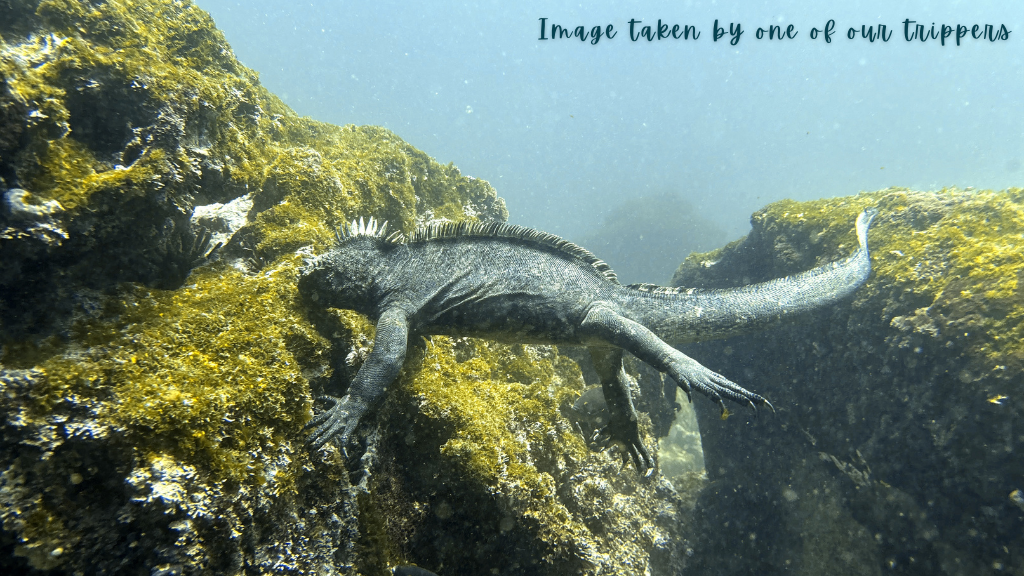
Depths vary from site to site, depending on what marine life you are hoping to see, marine iguanas for example are usually sited at around 5 metres, whereas schools of hammerheads are commonly seen up to 30 metres deep. For this reason, we recommend holding at least your Advanced Open Water Certification (or equivalent) to make the most of the diving in The Galapagos. Most dive sites also have substantial drop offs and underwater volcano walls that plunge down hundreds of metres so being comfortable at maintaining your buoyancy when you can’t see the bottom is an essential skill to have before taking a diving trip to The Galapagos.
For our Girls that Scuba Trips, we recommend guests have a minimum of 100 logged dives to join us on our Galapagos Trip, and most liveaboards will also require a minimum of 60-100 dives as well.
What about those currents in The Galapagos?
You might have heard of The Galapagos Islands being referred to as the “Crossroads of the Sea”, this name comes from the fact that the islands sit at the intersection of three major ocean currents and are exposed to huge swells from both hemispheres.
Due to this geographically unique location, it’s no surprise that many of the best dive sites in the Galapagos like Darwin’s Arch and Shark Point often have very strong, unpredictable currents and large swells. At popular sites like Gordon Rocks and Wolf Island there are vertical walls where currents don’t just move forward and backwards but can move straight up or straight down as well. This can lead to a downwelling which can pull a diver down rapidly. The volcanic islands also create narrow channels that water is forced between which speeds up the motion of the water creating what’s commonly known as a “washing machine”.
For many divers, the added adrenaline from a strong current during a dive can be an exciting addition to a dive, but many divers do not share this opinion.
In our experience, currents often bring along the fun creatures and make for some incredibly memorable dives. It is important to consider, however, that the currents specific to The Galapagos Islands create some of the most unpredictable scuba diving conditions in the world. You really want to be sure that you have enough experience diving in strong currents before you dive The Galapagos (which is why minimum dive requirements are in place) to make sure you have the skills and experience for the safest and most enjoyable experience possible.
Currents are not something to be afraid of but having knowledge on how to deal with them is something every diver should know. Here are a few quick-tips, and we also recommend checking out our full guide:
- Pay close attention to briefings. Some Komodo dive sites have to be dived in a specific way to stay safe in the currents.
- Follow guides closely underwater. They know the conditions and sites, and those conditions can change very quickly. You’ll want to be close enough to see their signals if the dive plan needs to change.
- Carry a DSMB. Dive operators will often enforce this as a rule. If you get carried away at the surface, you’ll want to be seen from far away, and a DSMB will help hugely. Our Girls that Scuba DSMB is incredibly visible.
- Consider a PLB. If that DSMB isn’t enough to get you found in a sticky situation, a PLB or other location device could be life-saving.
- Respect the requirements. We already mentioned minimum certification requirements and logged dive requirements, but it’s worth repeating here. The requirements are there for your safety and for your enjoyment. You might not enjoy The Galapagos the way you should if you’re struggling with buoyancy when you’ve only got 20 dives under your belt.
Which are the best Dive Sites in The Galapagos?
There are so many amazing dive sites across The Galapagos Islands, it’s difficult to narrow them down to the “best” sites but below are some of the most iconic sites that you don’t want to miss:
Golden Rocks: Located near Santa Cruz and nicknamed “The Washing Machine” because of its powerful, swirling currents and surface swells. This site is a submerged volcanic crater and one of the best dive sites in the Galapagos that’s accessible by a day dive boat. At Golden Rocks there is a resident school of hammerhead sharks as well as the chance to see sea lions, manta rays and large sea turtles.
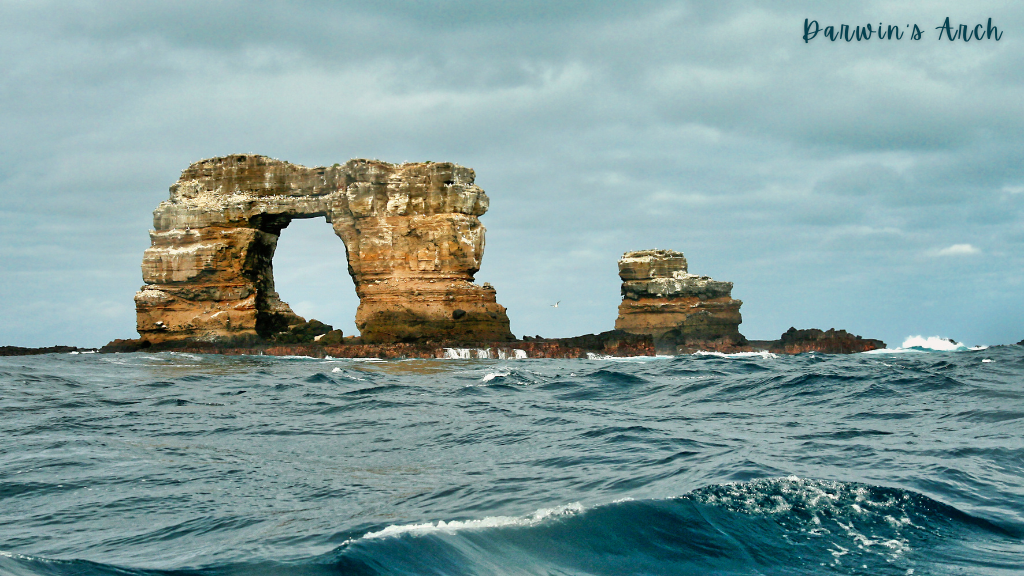
Darwin’s Arch: Accessible only by liveaboard boats, most liveaboard tour companies in Galapagos use Darwin’s Arch as their biggest selling point, and for good reasons. Within 30 feet, you may encounter eagle rays, Manta rays, turtles, dolphins, and if you are extra lucky, whale sharks. Hammerhead sharks, Galapagos sharks, and reef sharks are all commonly seen in Darwin’s Arch. Divers often dive here over and over again – it is that magnificent of a dive site. The currents in this dive site are unpredictable, so be sure to go with a reputable company with experienced guides.
Shark Point: There are a number of great dive sites on Wolf Island, but Shark Point is the most sought after. Similar to Darwin’s Arch, this dive spot is only accessible from a liveaboard, and you have to be an experienced diver to manage this dive site, as the currents are harsh and visibility can be quite limited. It is all worth it when a majestic whale shark swims right by you, though.
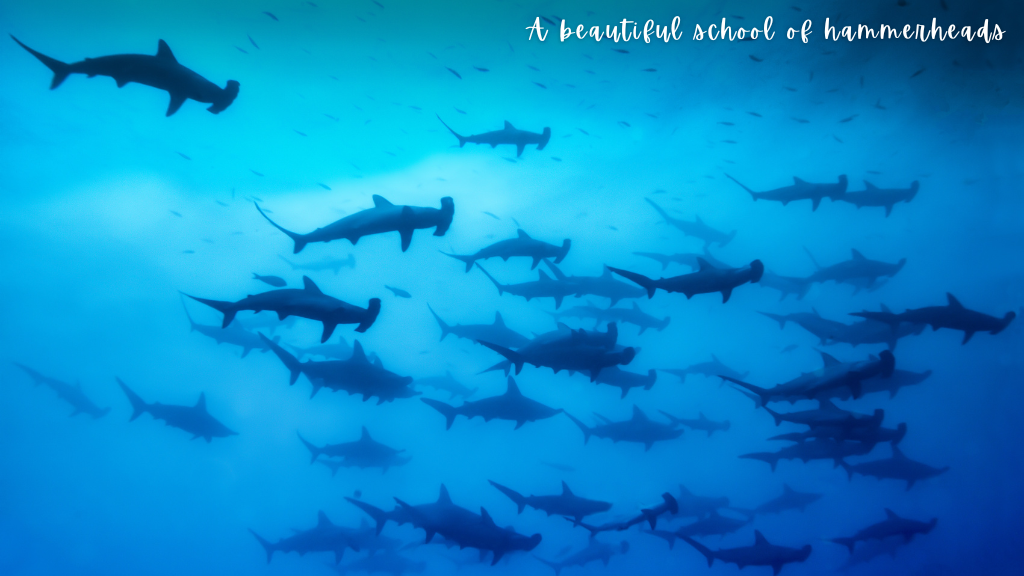
Kicker Rock: Known locally as “Sleeping Lion” is one of the most visually stunning and ecologically rich sites in the Galapagos. Located about a 45-60 minute boat ride from Puerto Baquerizo Moreno on San Cristobal Island, Kicker Rock is a volcanic tuff cone that towers almost 150 metres out of the ocean. This dive site is one of your best opportunities to see scalloped hammerhead sharks as well as large whitetip and blacktip reef sharks, green turtles, sea lions and spotted eagle rays.
Should I dive The Galapagos from a Liveaboard or Land Based Resort?
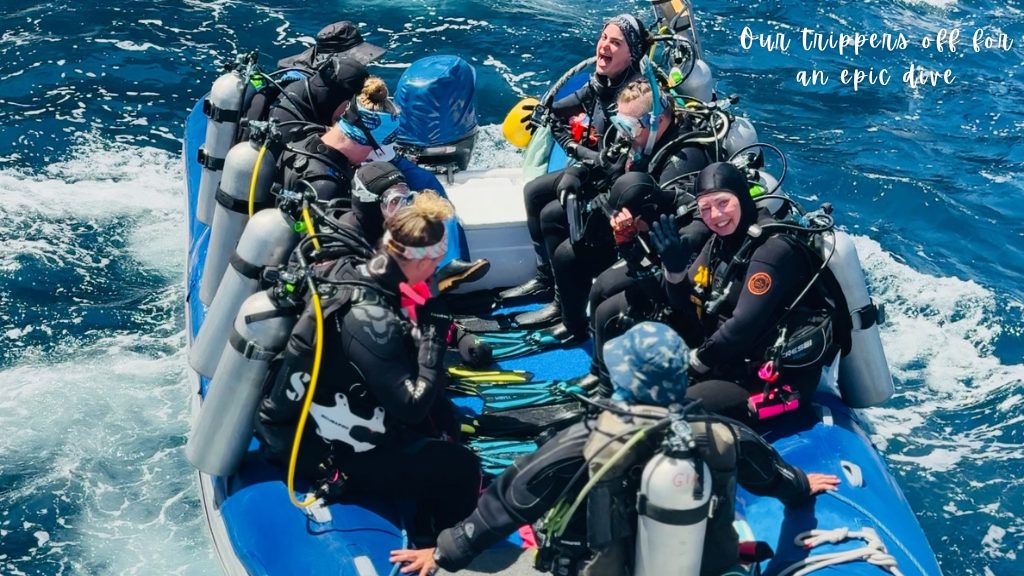
So, should you experience diving in The Galapagos from land, or from a liveaboard? At Girls that Scuba, we are huge advocates of Liveaboard Diving, and we always opt for Liveaboards for our GTS Trips to The Galapagos.
Liveaboards in The Galapagos
Liveaboards are a great way to access far off places and The Galapagos is no exception as certain remote dive sites are only accessible by Liveaboards in the Galapagos. They also come with very experienced guides that will keep you safe and ensure an enjoyable diving experience.
Here are some of our favourite Liveaboards in The Galapagos:
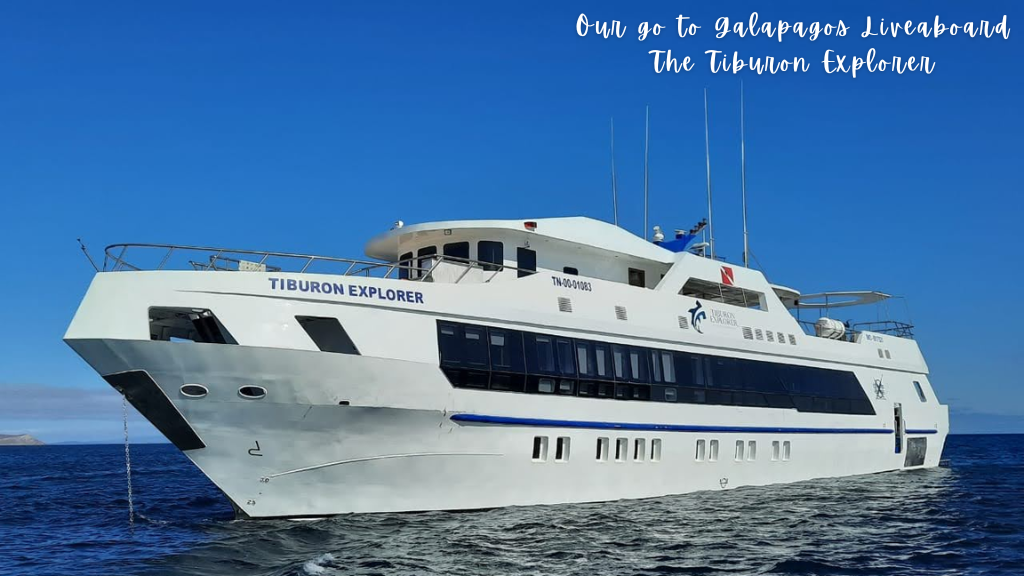
Tiburon Explorer: Girls that Scuba’s go to vessel for diving in the Galapagos! Built in 2020 and renowned for its eco-luxury, Tiburon Explorer is elegant and spacious, accommodating up to 16 guests with large rooms with ocean views, a huge sun deck with a jacuzzi and daybeds. It is also a certified Green Fins member which is a prominent international conservation initiative aimed at reducing the environmental impact of scuba diving and snorkeling on marine ecosystems.
Galaxy Diver II: One of the more luxurious vessels in the Galapagos, Galaxy Diver II accommodates 16 guests with a spacious dive deck, camera tables, gear rinse stations, and free Nitrox for certified divers. The cabins were fully renovated in 2023 to offer a modern, bright and boutique hotel aesthetic. There are also multiple communal areas including a shaded sundeck and jacuzzi.
Galapagos Aggressor III: Custom built specifically for underwater photographers, the Galapagos Aggressor III has massive camera charging stations, editing benches and support for complex camera rigs. Also accommodating up to 16 guests with large staterooms offering sea views, chef prepared plated dinners and a large top deck with a hot tub, loungers and deck chairs.
Danubio Azul: One of the best options for budget conscious divers, the Danubio Azul accommodates up to 16 guests with 9 cabins. The main deck has an alfresco dining area, sundeck, shaded diving area and a dive deck. Although the Danubio Azul may not be as luxurious as some of the other vessels, the crew to guest ratio is nearly 1:1, making it a highly personalised and safe experience.
Land Based
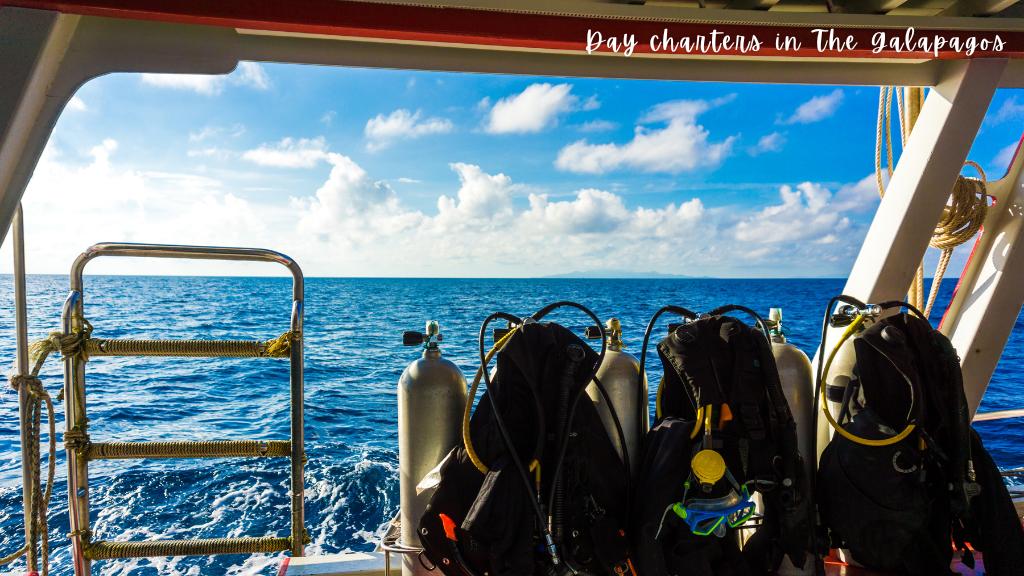
If you would prefer not to spend a full week on a Liveaboard, there are plenty of dive centres offering single day dive trips. Land based dive centres are located on the two main islands with airports, Santa Cruz and San Cristobal.
Dive Centres in Santa Cruz:
Scuba Iguana: A PADI 5 Star Dive Centre that has been operating since 1995 offering daily diving tours 7 days a week on thier purpose built dive boats providing a hot lunch as well as snacks, water, tea and towels.
Ocean Deep: Founded in 2007, Ocean Deep is a family run dive centre led by expert PADI certified professionals. The crew on their dive boat has years of experience navigating and diving around the islands ensuring that every expedition is exciting.
Dive Centres in San Cristobal:
Blue Evolution: Operating since 2005 and offering daily diving tours on their large, comfortable boats equipped with delicious lunches and snacks.
Planet Ocean: Established in 2011, Planet Ocean is a highly rated PADI and SSI Dive Centre with a fleet of well equipped day boats.
We always recommend doing your own research when looking for a dive centre, asking friends for recommendations and reading reviews!
Scuba Diving vs Snorkelling in Galapagos
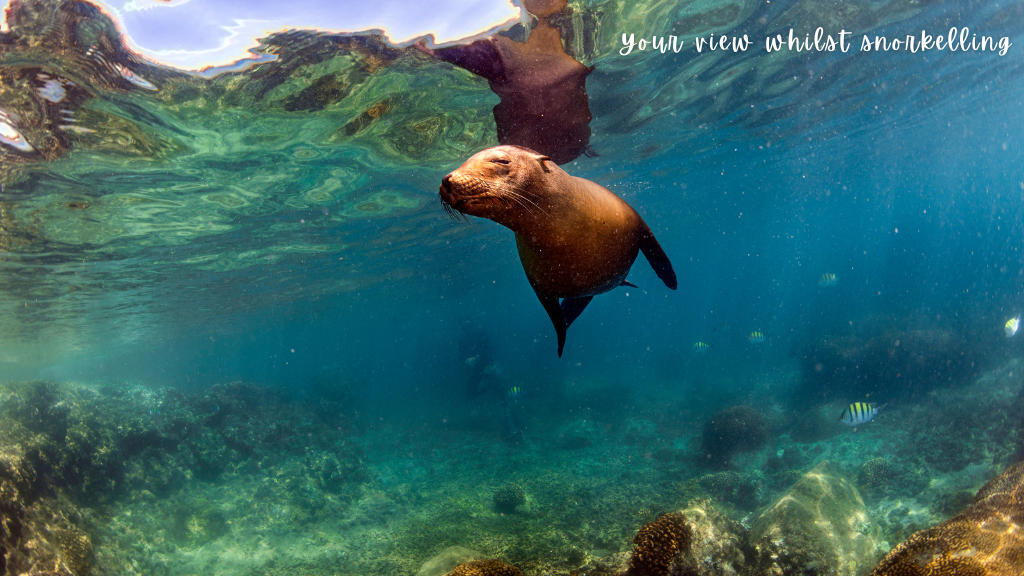
Can you still enjoy the marine life of Galapagos if you do not dive? The answer is yes! Many dive sites have visibility clear enough for snorkelers, such as the spectacular bay below Cerro Tijeretas, where you could potentially see sharks, countless species of fish, dolphins, manta rays, and turtles. One of the most unique snorkeling experiences in Galapagos is that you can watch from below the surface as blue-footed boobies dive underwater to catch fish.
Another popular snorkeling spot in Galapagos is Las Tintoreras, which is heavily regulated to keep the delicate ecology in balance. You can potentially see white tip reef sharks, marine turtles, manta rays, iguanas and sea lions while snorkeling in the hidden coves around the island.
In many cases, snorkeling can be just as good as diving, but obviously diving lets you go farther and stay down longer!
Things to do on land in The Galapagos
The Galapagos is not just an epic adventure underwater, above the surface The Galapagos offers some of the most extraordinary land based experiences in the world that you wouldn’t want to travel all that way to miss out on.
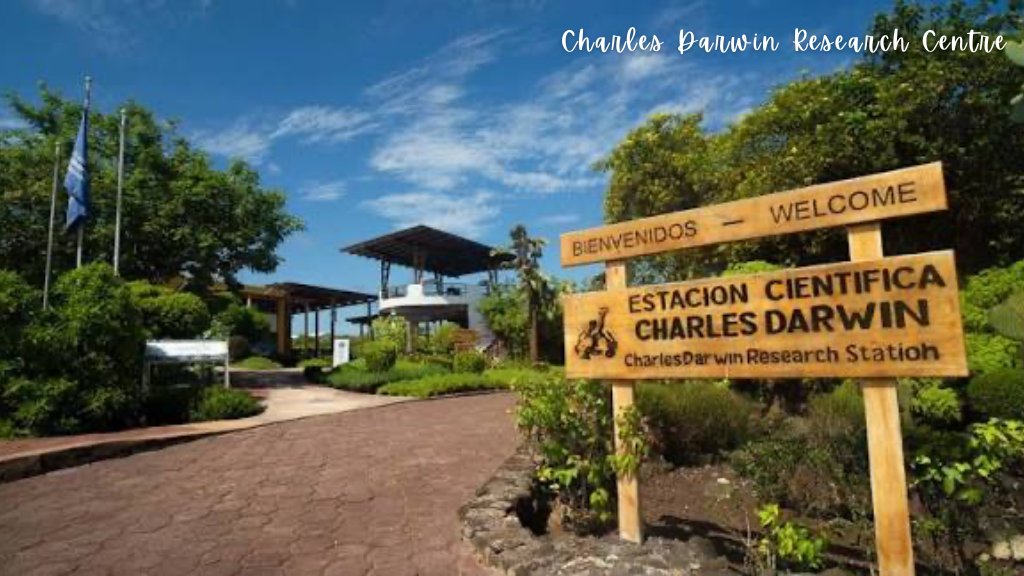
Charles Darwin Research Centre: The operations HQ for The Charles Darwin Foundation, an international non-profit organisation conducting scientific research and providing the Galapagos National Park Directorate with ecological advice. You can experience a mix of live wildlife breeding facilities, indoor scientific exhibitions, and outdoor ecological trails.
Souvenir shopping in Puerto Ayura: Who doesn’t love to bring home a souvenir from an epic adventure? Puerto Ayura is a cute town with fantastic shopping, we especially love Darwin and Wolf premium clothing and swimwear shop, there are also lots of restaurants and cafes, it’s definitely a must visit for us!
Giant Tortoise Reserve: Head on a fascinating journey through the endemic forest where you come face to face with the legendary giant tortoises and explore amazing lava tunnels in their natural state.
Day Trip to North Seymour Island: This day trip departs from Puerto Ayora, you’ll board a yacht bound for North Seymour Island. This tour is a birdwatcher’s dream with the likelihood to spot frigate birds, blue footed boobies and swallow tailed gulls. You will also head for a hike around the island before enjoying a snorkel with sea lions.
Day Tour to Isabela Island with Tintorera Islet, Snorkelling Wetlands & Flamingos: A thrilling day tour to Isabela Island beginning at Tintorera Islet, home to incredible marine life including marine iguanas, sharks and penguins. You’ll also visit the island’s wetlands, a habitat for flamingos and the Giant Tortoise Breeding Centre. This excursion promises an adventurous and educational experience with amazingly unique wildlife.
What Scuba Gear to Wear for the Cold Water
Galapagos is cold water diving. Keeping warm whilst scuba diving is essential for your health and safety whilst also ensuring that you do not have to end a dive early due to being uncomfortable.
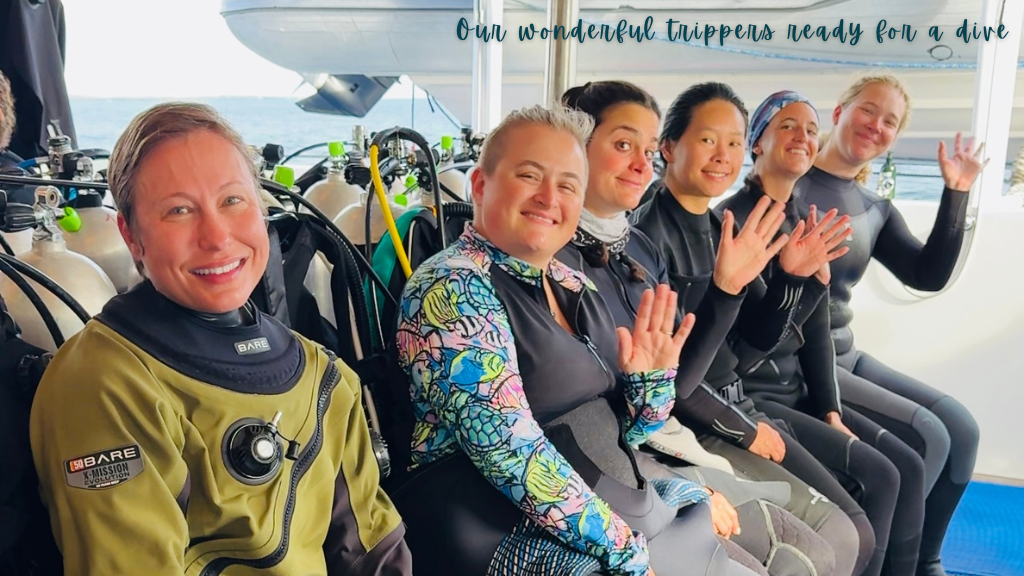
A 7mm wetsuit or a semidry is the industry standard for diving in The Galapagos. Here are some of our favourites:
- Fourth Element Women’s Xenos Arc 7mm Wetsuit
- ScubaPro Women’s Definition Steamer, 7mm Wetsuit
- ScubaPro Women’s NovaScotia 7.5mm Semi-Dry with Hood
If you are drysuit qualified then you might opt for this option. Unfortunately, there are not many drysuits that are specifically designed for women but there are a number of brands that make made to measure drysuits including Fourth Element, Otter Watersports and Northern Diver.
Additional kit that makes that entra difference when you’re diving in colder water are things like gloves, boots, hoods and vests. With gloves, the thicker they are the warmer your hands will be but the more difficult it is to grip things like cameras or DSMBs so sometimes the thicker option isn’t always the best option.
- ScubaPro Everflex YULEX Womens Hooded Vest, 5/3mm
- ScubaPro Everflex Gloves, 3mm
- ScubaPro Everflex Gloves, 5mm
- Delta Dive Boots, 5mm
Added The Galapagos to your Scuba Bucket List? Share this guide with a buddy who needs to join you!